A field guide for translators, interpreters, localizers & subtitlers

What the machine
can't read.

AI can generate words, subtitles, localized strings, and live approximations at speed. It cannot carry professional responsibility for meaning, culture, timing, risk, or audience trust. This is a working manifesto for translators, interpreters, localizers, and subtitlers who need a clear way to defend their value — and their fees.

Translatorsverify meaning
Interpretersprotect live understanding
Localizersadapt experience
Subtitlerstime the message
Intent
What the sentence is trying to do
Risk
Which words can cause loss or harm
Culture
What sounds natural, respectful, and local
Accountability
Who can defend every choice
Elle a rendu son tablier après quinze ans.
She returned her apron after fifteen years. ✎ She quit — after fifteen years.

// "rendre son tablier" — lit. "to hand back one's apron" — a fixed idiom for resigning, used since the era of household staff. No apron involved in a century.
— one line, one silent decision a fluent model has no way to flag as a decision at all.
Fluency is not the same thing as meaning. A machine can produce a grammatical sentence in the target language while being completely wrong about what the source said — and nothing in the output will tell you that happened.
TWELVE LANGUAGE CASES, COST DATA, BUYER CHECKLISTS, AND A LIVE TEST — ALL BELOW
The translator's edge

The human touch is where quality becomes visible

AI can generate a plausible sentence. A translator turns that sentence into a message that is accurate, appropriate, and safe for the people who will actually read it.

Point 01

Humans notice what is missing

A machine rarely says, “I need more context.” A translator does. That pause prevents wrong pronouns, wrong legal assumptions, wrong tone, and wrong facts from reaching the reader.

Point 02

Humans protect trust

Readers do not judge translation by grammar alone. They judge whether the voice feels credible, respectful, local, and intentional. That is not a surface polish; it is brand protection.

Point 03

Humans take responsibility

Professional translation leaves a trail of decisions: terminology, queries, revisions, approvals. If a choice matters, someone can explain it. That accountability is absent from raw output.

Simple message for buyers: AI can help produce a draft. Only a qualified human can decide whether that draft deserves to be published.

Fees, boundaries, and survival

Do not price human responsibility as if it were a machine shortcut

AI has pushed many clients to expect lower translation prices. But when a translator is asked to “just check” AI output, the task is not smaller. It is often more risky: the translator must detect hidden errors, repair broken meaning, protect the client from consequences, and still carry professional responsibility for the final text.

Post-editing is not proofreading

Proofreading polishes a text that was already translated by a competent human. AI review is forensic work: every fluent sentence may be right, partly right, or dangerously wrong. Checking plausibility takes expertise.

The liability did not become cheaper

If a mistranslation reaches a patient, court, regulator, buyer, or investor, nobody will say “but the AI made it.” The final human reviewer is the person clients expect to trust. Responsibility must be priced.

Bad AI drafts can take longer than fresh translation

A clean human translation moves forward. A poor machine draft forces the translator to read, doubt, compare, undo, rewrite, and re-check. The cheaper-looking workflow can create more cognitive work, not less.

Discounting teaches the wrong lesson

When translators accept “AI-checking” at bargain rates, clients learn that professional judgment is an optional afterthought. Over time, that turns a profession into a low-paid safety net for machine output.

The professional boundary

A translator can use AI as a tool. A client cannot use AI as an excuse to remove the value of the translator.

The boundary is simple: if your name, judgment, reputation, or liability stands behind the text, your fee must reflect that responsibility.

  • Do not sell “a quick check.” Sell risk assessment, correction, terminology control, cultural fit, and final accountability.
  • Do not accept unlimited repair for a reduced rate. Poor AI output is not your discount problem; it is the client’s workflow problem.
  • Do not certify what you were not allowed to fully review. If the client restricts time or scope, restrict the claim of quality.
  • Do not let speed replace expertise. AI may accelerate drafting; it does not reduce the professional skill required to approve publication.
A logical pricing response

How to answer the “AI already did it” argument

Clients often frame AI as reducing your work. Reframe the discussion around risk, responsibility, and the real task being purchased.

Client saysWhat is hidden inside that requestProfessional answer
“AI translated it, so it should be cheaper.”The client assumes drafting is the valuable part and checking is easy.“The draft is not the deliverable. The deliverable is a safe, accurate, publishable text. My fee covers the expertise needed to decide that.”
“Just look it over quickly.”A quick look cannot catch false friends, omissions, register errors, legal force, numerical mistakes, or cultural problems.“I can do a limited review, but then I cannot certify quality. Full responsibility requires full review.”
“The AI output is very fluent.”Fluency makes errors harder to see because the sentence sounds credible even when meaning changed.“Fluency is exactly why professional review matters. The dangerous errors are the ones that do not look like errors.”
“Other vendors are cheaper.”The comparison may be between raw MT, light editing, and professional translation as if they were the same product.“That is a different risk level. If you need a lower-risk final text, you need a qualified human process.”
“We only need post-editing.”Post-editing can range from light cleanup to full retranslation, depending on AI quality and content risk.“I will first assess the output. If it requires full rewriting, it will be priced as translation, not as light editing.”
Practical rules for translators

Price the work so the profession remains a profession

Defending fees is not only an individual business decision. It is how translators avoid training the market to treat human expertise as a disposable layer after AI.

Client script

“AI may reduce drafting time, but it does not reduce the responsibility of delivering a correct final text.”

Client script

“If you want me to sign off on the translation, I need the time and fee required to verify it properly.”

Client script

“I can work with AI output, but I cannot price professional judgment as a button click.”

A note to language professionals

If translators, interpreters, localizers, and subtitlers lower their fees simply because AI is present in the workflow, the market will stop seeing the difference between a tool and a profession. The answer is not to reject technology. The answer is to refuse a false equation: AI speed is not the same as human accountability. Protecting your fee protects the standard clients rely on, whether they understand it yet or not.

The fee pledge for AI-era language professionals

We can use technology. We can adapt workflows. We can offer transparent service levels. But we should not teach the market that human approval is the cheapest part of communication.

  • We do not reduce our fee simply because a machine produced a draft.
  • We inspect AI output before accepting the scope or price.
  • We distinguish limited review from publishable professional approval.
  • We price risk, expertise, urgency, and accountability.
  • We keep the authority to rewrite, reinterpret the brief, re-time, re-localize, or reject.
  • We protect the profession by refusing full liability at bargain rates.

The profession is not the keyboard. The profession is the decision.

AI can draft, predict, and imitate. But translators, interpreters, localizers, and subtitlers do something more valuable: they decide what meaning is correct, what wording is safe, what timing works, what culture expects, and what can be delivered with a professional name attached.

Four disciplines, one shared truth

AI output still needs a qualified human gatekeeper

These professions are not interchangeable, but they share the same professional core: context, judgment, responsibility, and audience awareness. The more AI output floods the market, the more valuable these human controls become.

Translators

Guardians of verified meaning

They compare source and target, detect omissions, resolve ambiguity, control terminology, and protect legal, medical, technical, and literary intent.

Interpreters

Guardians of live understanding

They manage immediacy, stress, ethics, confidentiality, speaker intent, repair strategies, and the human dynamics of real-time communication.

Localizers

Guardians of market fit

They adapt language to products, UX flows, culture, search behavior, user expectations, screenshots, string limits, and brand voice.

Subtitlers

Guardians of time, space, and sense

They compress speech without killing meaning, preserve rhythm, handle reading speed, synchronize timing, and make audiovisual content watchable.

Why replacement is the wrong frame

The market will not lack output. It will lack trusted output.

AI changes where the work begins. It does not remove the need for the person who decides whether the result is usable. That decision is the professional value clients are really buying.

Proof 01

Fluency hides failure

Modern AI often sounds correct even when it has changed a fact, softened an obligation, mistranslated a number, flattened a register, or missed a cultural reference. Human experts are needed because the worst errors are no longer ugly — they are invisible.

Proof 02

Context is not optional

A pronoun in Turkish, a legal term in French, a UI string with no screenshot, a subtitle with a scene cut, or a speaker’s tone in a medical appointment cannot be safely judged from words alone.

Proof 03

Audience changes the answer

The same sentence may need to be formal, warm, neutral, urgent, reassuring, brief, searchable, legally exact, or easy to read in two seconds. AI can suggest; professionals choose.

Proof 04

Responsibility has a price

If a human is expected to approve the final translation, interpretation setup, localized product, or subtitle file, the client is buying accountability. Accountability must never be priced as a “quick check.”

Subtitling is not text under a video
We need the line to land before the cut — and still sound like the character.

The subtitler’s invisible work

AI may produce a literal caption, but subtitling requires audiovisual judgment. The viewer must read, understand, feel, and keep watching — all within strict timing and space.

  • reading speed and character-per-line limits
  • scene cuts, shot changes, and speaker identification
  • compression without meaning loss
  • humor, register, slang, songs, and on-screen text
The four gates of human control

Before any AI-assisted work reaches people, a professional must open these gates

The future is not “human versus machine.” The future is whether organizations understand which decisions must remain human. For translators, interpreters, localizers, and subtitlers, those decisions gather around four gates.

The meaning gate

Does the target version preserve the same facts, obligations, uncertainty, terminology, register, and intent as the source?

If this is wrong, who acts on the wrong meaning?

The live gate

In interpreted communication, does the message survive stress, speed, emotion, confidentiality, unclear speech, and power imbalance?

If this fails live, can it be repaired in time?

The market gate

Does the localized product feel natural to the user, fit the screen, support the brand, match search behavior, and respect local expectations?

If it sounds exported, will users trust it?

The timing gate

In subtitles, does the viewer have enough time to read, understand, and stay with the scene without losing tone, humor, or plot?

If it misses the moment, is it still a translation?
The professional control model

Do not sell yourself as the last cheap step after AI

When a client says “AI already did it,” answer with the truth: AI may have generated material, but the professional is being asked to make it safe, accurate, natural, timed, localized, and defensible. That is not a discount task. That is the core task.

Identify the risk before accepting the rate

Ask what the content is for: internal understanding, publication, contract, patient communication, app launch, legal proceeding, training video, public subtitle release. Risk determines scope.

Inspect the AI output before quoting

A good draft may support efficiency. A bad draft can slow the expert down. If the output requires retranslation, re-localization, re-segmentation, or full subtitle repair, price it accordingly.

Separate limited review from professional approval

A quick check can only receive limited assurance. Publishable quality requires source comparison, terminology control, context checks, timing checks, and authority to rewrite.

Keep the right to reject machine output

Human control means the professional can say: “This is not editable at the requested level; it must be redone.” Without that right, the workflow is not quality assurance.

Price the responsibility, not the draft

The client is not paying for the words AI already produced. They are paying for the professional decision that the final result can be used without embarrassing, misleading, or harming people.

Service levels, not surrender

Offer options — but never full liability at a bargain rate

Use clear service levels to protect both the client and the profession. Lower price must mean lower scope, not hidden full responsibility.

Service levelWhat the client receivesProfessional boundaryFee logic
Gist / limited reviewBasic language check for low-risk internal use.No full source comparison, no publication guarantee, no certification, no final liability.Lower fee only because assurance is limited.
Full AI post-editingSource comparison, terminology control, rewriting, style correction, consistency, and publishable quality.The professional may rewrite or reject AI segments.Professional fee; sometimes equal to translation.
Localization QAUI/product language checked against context, screenshots, user journey, market expectations, and brand voice.Strings are judged in product reality, not as isolated text.Priced by complexity, risk, and testing scope.
Interpreting supportHuman live interpretation or human oversight for high-stakes multilingual communication.Confidentiality, ethics, turn-taking, speaker intent, and repair remain human responsibilities.Priced as live expertise, not audio conversion.
Subtitling / subtitle QCTiming, segmentation, compression, reading speed, scene fit, speaker clarity, and idiomatic language.Captions must work as audiovisual communication, not just translated text.Priced by runtime, complexity, and QA level.

A ready-to-use client reply

Thank you for sending the AI-generated version. I can review AI-assisted material, but professional approval is not a quick discount step. To deliver a usable final result, I need to verify meaning against the source, correct omissions and terminology, adjust tone for the audience, and — where relevant — check localization context, interpreting risk, or subtitle timing. My fee reflects the responsibility of approving the final communication, not the fact that a machine produced a draft.
Do not compete with AI on speed. Compete where clients actually need you: risk, context, culture, timing, and trust.

The professional position

Decode the client request

When clients say “AI already did it,” translate what they are really asking for

Most fee pressure begins with unclear language. Replace vague requests with named services, named responsibility, and named limits.

Client phraseWhat it sounds likeWhat it really requiresProfessional reply
“Just check the translation.”A quick read-throughSource comparison, error detection, terminology decisions, style correction, and responsibility for the final text.“I can provide either limited review or full professional revision. The fee depends on which level of assurance you need.”
“AI translated the app strings.”Language is already doneContext testing, screen fit, consistency, UX tone, button clarity, placeholders, screenshots, and market expectations.“Localization QA is not string cleanup. It checks whether the product works for the target user.”
“Can AI interpret this meeting?”Speech conversionConfidentiality, turn-taking, speaker intent, repair, emotion, domain knowledge, and live accountability.“For low-risk gist, automation may help. For decisions, rights, care, money, or conflict, use a professional interpreter.”
“The subtitles are already generated.”Captions only need correctionTiming, segmentation, reading speed, compression, speaker labels, shot changes, and natural target-language flow.“Subtitle QC is audiovisual work. If timing and segmentation are wrong, it must be priced as repair or resubtitling.”

Use written scopes

Every AI-assisted job should say whether it is limited review, full revision, localization QA, interpreting support, subtitle QC, or full human-led work.

Use responsibility language

Do not only quote words, minutes, or runtime. Quote the level of assurance, risk, and professional accountability being requested.

Use refusal professionally

When the output is too poor, say so. A professional “no” protects the client, the audience, and your name.

Guide

Twelve cases, one pattern

Turkish, Chinese, French, Hindi, German, Italian, Russian, Ukrainian, Japanese and Spanish — different grammars, the same failure underneath. Each case shows the source, the machine's literal pass, and the correction a human reaches for, with the reasoning a model has no mechanism to perform.

For the people signing the contract

What raw machine output actually costs

Not hypothetically — these are documented outcomes from clinical and legal settings where machine translation was deployed without a human checking it.

8–19%
of Google Translate renderings of real hospital discharge instructions contained meaningful errors — 8% for Spanish, rising to 19% for other languages — some judged capable of causing clinical harm.
From published studies of machine-translated discharge instructions (ED assessment; pediatric study)
47
knee-replacement surgeries went wrong in a German hospital cluster after a single mistranslated technical term on prosthesis packaging reversed "non-modular cemented" into "non-cemented."
From a published case review in Patient Safety in Surgery (case review)
100%
of major commercial and research neural translation systems tested were shown to fail on basic numerical translation tasks — a category of error with direct financial and clinical stakes.
From behavioural testing research on numerical translation in NMT systems (paper)
Exhibit A
$10M
REPORTED COST OF ONE UNREVIEWED SLOGAN

Two words, translated with confidence, in the wrong direction

In 2009, a well-known international bank took its U.S. tagline global. The English phrase relied on an idiomatic sense that didn't carry over — in market after market, the literal translation flipped the bank's intended meaning into its opposite.

Intended: "Assume Nothing"
Landed as: "Do Nothing"

For a bank whose entire pitch was attentiveness, telling customers to do nothing was the one message it could not afford to send. The fix was a full global rebrand.

Reported by BBC Radio 4 and industry coverage; cost figure commonly cited as US$10M (BBC).

The pattern behind the numbers

None of these failures came from a broken tool. They came from a working one, used exactly as intended, on the kind of ordinary sentence that looks safe to automate — a dosage note, a packaging spec, a contract clause. The error rate isn't the risk. The invisibility of the error is: nothing in a fluent machine output flags which sentence was the one that needed a second pair of eyes.

This isn't just our opinion

The industry already drew this line — in writing

The international standard for professional translation and the standard for machine-translated content are not the same document. That split exists because quality bodies concluded they aren't the same product.

ISO 17100

Human translation services

Requires a qualified translator, then mandatory independent revision by a second qualified linguist who compares the result against the source — plus documented qualifications, project management, and audits. This is the baseline for legal, medical, and regulated content.

ISO 18587

Post-editing of machine translation

A separate, lighter standard for human-edited MT output. It exists precisely because raw or lightly-edited machine translation doesn't meet the bar ISO 17100 sets — the industry needed a lower tier to describe it honestly.

Translation buyers occasionally ask which standard a vendor holds. It's worth asking which one applies to the workflow you're actually being sold — not just whether a certificate exists.
What expertise actually looks like

Language professionals are not a slower version of the model

Different roles, same discipline: a professional knows which decision is dangerous before the client sees the final version — not after the damage is public.

Translator

Reads the sentence for consequence, not just wording

A contract term, dosage instruction, patent claim, or public statement is not merely vocabulary. It can create obligations, risks, rights, expectations, and actions. A translator protects the meaning that will be acted on.

Interpreter

Protects live trust when there is no rewind button

In a hearing, appointment, negotiation, or conference, the interpreter manages turn-taking, tone, stress, repair, confidentiality, and speaker intent in real time. The professional value is not word replacement; it is communication control.

Localizer

Makes language work inside a product and a market

Buttons, onboarding flows, product pages, games, help articles, and error messages must fit screens, user habits, search terms, culture, and brand voice. Localizers make the experience feel built for the user, not exported to them.

Subtitler

Carries meaning through time limits and silence

A subtitle is a performance of compression: short enough to read, timed enough to land, natural enough to disappear, and accurate enough to preserve the scene. A fluent line that misses the cut is still a failed subtitle.

The scannable version

What you're actually buying, side by side

For anyone comparing quotes: this is the difference that a lower price on the machine side doesn't show you.

DimensionMachine outputHuman professional
Context beyond the sentenceLimited to the segment in front of it, or a fixed windowReads the document, setting, product, audience, timing, and purpose
Idiom & cultural referenceOften literal; hit-or-miss on fixed expressionsRecognizes the unit, replaces the image, keeps the meaning
Register & formalityDefaults to statistically common tone, regardless of contextMatches formality to relationship, industry, and stakes
Ambiguity resolutionGuesses the statistically likely readingConfirms the actual reading from context or asks
AccountabilityNo signature, no liability, no memory of the choiceNamed, credentialed, and answerable for the final communication
Where errors surfaceDownstream — legal, support, PR, patient safetyCaught before delivery, as part of the job
Cost timingLow upfront, unpredictable and often larger laterKnown upfront, budgeted, and final
What AI does not ask

Six invisible questions a translator answers

The strongest argument for human translation is not “machines make mistakes.” It is that humans ask questions machines are not designed to ask.

Who is speaking?

Age, status, relationship, region, and power distance change the correct wording before the first word is translated.

Who will read this?

A patient, judge, investor, gamer, tourist, or angry customer each needs a different version of “clear.”

What must not be softened?

Warnings, deadlines, exclusions, side effects, and obligations often look like ordinary phrases until a specialist recognizes their force.

What must not sound literal?

Metaphors, idioms, humor, slogans, and ceremonial language usually need replacement, not translation.

What should be queried?

When the source is unclear, a translator can ask. A machine resolves ambiguity by guessing and hides the guess inside fluent prose.

What will this cost if wrong?

A human weighs consequences. A model has no sense of liability, reputation, patient safety, or regulatory exposure.

The “human touch” is not warm language added at the end. It is judgment applied before, during, and after every risky sentence.
Self-diagnosis for buyers

Where does your project actually sit?

Not every document carries the same stakes. Use this to locate your own content honestly — then decide how much human oversight it needs.

Low stakes
Internal notes, casual chat logs

Machine draft alone is often fine. Low audience, low permanence, easy to correct.

Moderate
Product descriptions, help articles

Machine draft plus a light human pass for tone, accuracy, and search terms.

High stakes
Marketing campaigns, UI, onboarding flows

Full human translation. Tone and cultural fit directly affect conversion and brand trust — see Exhibit A.

Non-negotiable
Contracts, medical, patents, regulatory filings

ISO 17100-grade process required: qualified translator plus independent second-linguist revision. Anything less is a liability, not a shortcut.

Try it yourself

Machine, or human?

Six idioms, translated two ways each. Pick the one you think came from a machine.

Round 1 of 6Score: 0 / 0

Click the option you think is the machine translation

Three seconds to see the difference

Small edits. Big consequences.

These are the kinds of changes clients often call “minor.” Translators know they are the whole point.

Machine: “You must not fail to submit the form.”
Human: “You must submit the form.”
The human removes noise without weakening the obligation.
Machine: “Dear customer, your complaint is accepted.”
Human: “Thank you for contacting us. We have received your complaint.”
In support language, empathy and procedural clarity are part of accuracy.
Machine: “Use before 07/08/2026.”
Human: “Use before 8 July 2026.”
Date formats can reverse month and day. A human removes a preventable risk.
The honest position

This isn't anti-technology. It's pro-accountability.

Most agencies already use machine translation somewhere in the pipeline. The argument isn't to ban the tool — it's about who holds the pen at the point where it matters.

Step 1

Machine draft

Fast first pass on high-volume, low-risk content. Good for speed and rough coverage.

Step 2

Human judgment

A qualified translator reads for idiom, register, ambiguity, and intent — the categories in the field guide above.

Step 3

A named signature

Someone stands behind the final text and can explain, defend, or correct every choice in it.

Skip step 2 on a marketing tagline, and you risk a $10M rebrand. Skip it on a dosage instruction, and the stakes are higher still. The tool isn't the problem. Removing the person who's accountable for what it produces is.

The pushback you'll actually hear

Fair objections, answered straight

No dodging the real arguments for machine translation — just an honest account of where they hold up and where they don't.

For procurement & legal

Before you trust a translation, ask this

A working checklist for vetting any vendor or workflow — click each one to check it off.

0 / 10 checked
Start clicking →
A closing argument translators can use

Do not sell “words.” Sell the risk removed.

Clients already know AI is fast. What they need to see is what speed cannot guarantee: judgment, context, terminology, live communication, product fit, subtitle timing, and accountability. This page is designed to make those invisible services easy to explain.

  • Ask what happens if the wrong sentence is the one nobody checks.
  • Show one idiom, one false friend, and one risk example.
  • Offer AI-assisted workflow only with human authority to rewrite.
  • Make the final text signed, reviewed, and defensible.
  • Price review work according to responsibility, not according to the presence of AI.
Why this still needs a person

What a human translator is actually doing

  1. Reading past the sentence. A pronoun, a tense, a level of formality — resolved by what came three paragraphs ago, or by who's in the room. A model translating one segment at a time often can't see that far, and even given the whole document, it guesses the statistically likely reading rather than confirming the true one.

  2. Knowing when to break the rules. The literal word is sometimes exactly wrong. Recognizing an idiom, a legal term of art, or a false friend requires knowing the target culture, not just the target dictionary.

  3. Carrying intent, not just information. A joke, a threat, a formal register, a deliberate ambiguity in the original — a human decides what the text is doing and protects that, even when it means changing the words entirely.

  4. Being accountable. A human translator signs their name to a reading and can explain, defend, and correct it. A model outputs a plausible string and moves on — with no memory of the choice and no stake in whether it was right.

  5. Costing less than the alternative. The bill for a qualified translator is visible and known in advance. The bill for a mistranslated clause, a botched discharge instruction, or a client insulted by the wrong pronoun arrives later, is larger, and lands on legal, support, or PR instead of the localization budget. Cutting translators doesn't remove that cost — it just moves it downstream and hides it until it's expensive.

  6. Protecting the profession by pricing responsibility honestly. When translators accept AI-control work as cheap cleanup, they teach the market that judgment is worth less than output. The profession survives by drawing a clear line: tools may assist the work, but professional accountability must be paid as professional accountability.

  7. Standing with every language profession. Translators, interpreters, localizers, and subtitlers are not defending nostalgia. They are defending the human control that makes communication accurate, usable, respectful, timed, and safe. AI may produce; professionals decide what deserves to reach people.

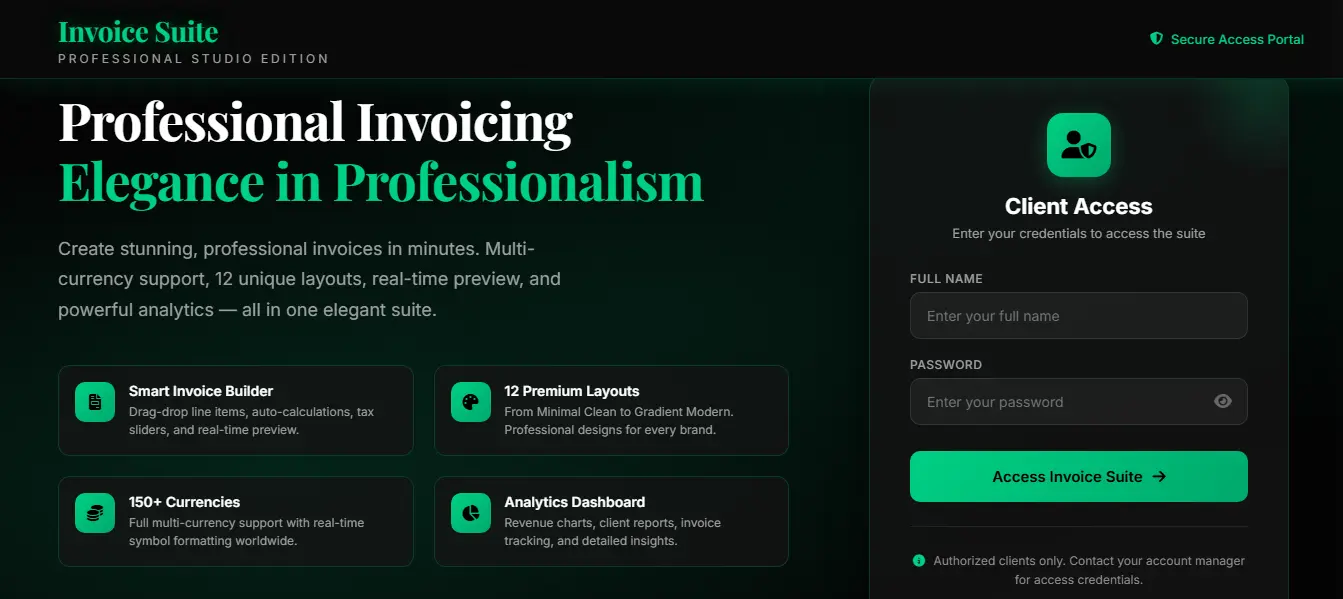
Note for Interested Parties: We have created a smart, browser-based invoicing application designed especially for freelancers who want to create professional invoices quickly, securely, and beautifully. We are now offering 7-day free-trial access for interested users. No registration, no credit card is required. If you would like to try Invoice Suite, contact us at: 📩 mustafa.yalcin@linguafx.com

For more information about Invoice Suite, please visit us at www.linguafx.com/invoice_suite.html
Invoice Suite preview